
Mineral vs Chemical Sunscreen Discover the best sunscreen for oily skin with our complete guide. Learn how to choose the right SPF, avoid common mistakes, and find lightweight, non-greasy options for daily protection.
Introduction
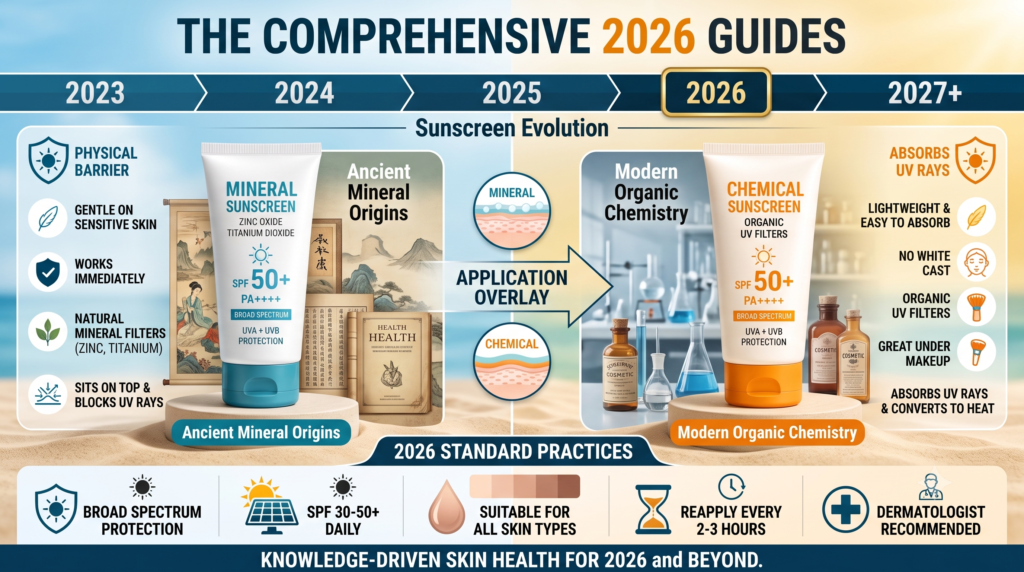
Walk into any beauty store or browse online, and you’ll quickly notice two main types of sunscreen: mineral (physical) sunscreen and chemical sunscreen. Both protect your skin from harmful UV rays, but they work in different ways and are suited to different skin types.
If you’ve ever wondered which sunscreen is right for you, you’re not alone. Choosing between mineral and chemical sunscreen can be confusing, especially with so many ingredients and marketing claims.
In this complete guide, we’ll compare mineral and chemical sunscreens, explain how they work, discuss their pros and cons, and help you choose the best option based on your skin type and lifestyle.
Why Sunscreen Matters
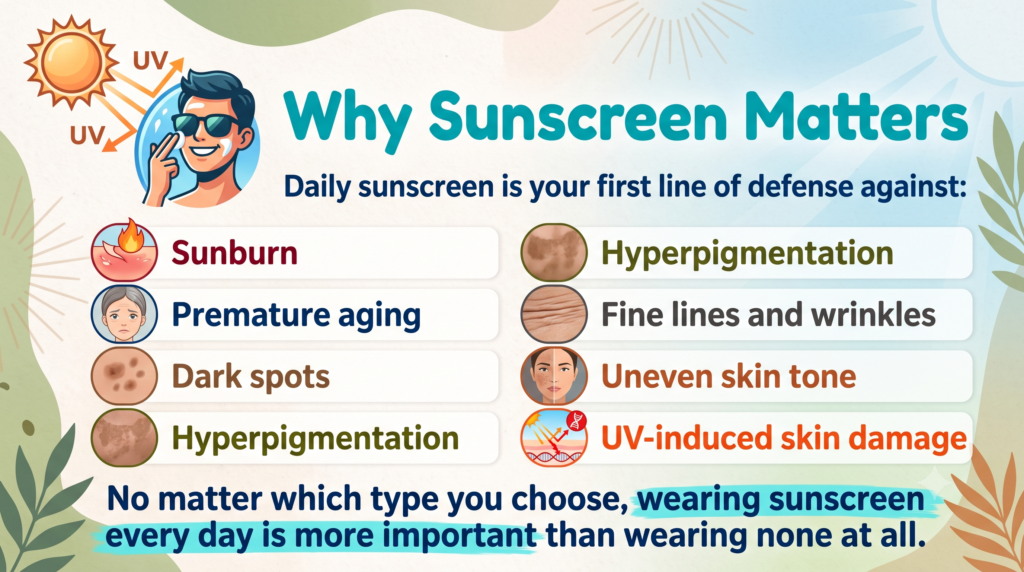
Daily sunscreen is your first line of defense against:
- Sunburn
- Premature aging
- Dark spots
- Hyperpigmentation
- Fine lines and wrinkles
- Uneven skin tone
- UV-induced skin damage
No matter which type you choose, wearing sunscreen every day is more important than wearing none at all.
What Is Mineral Sunscreen?
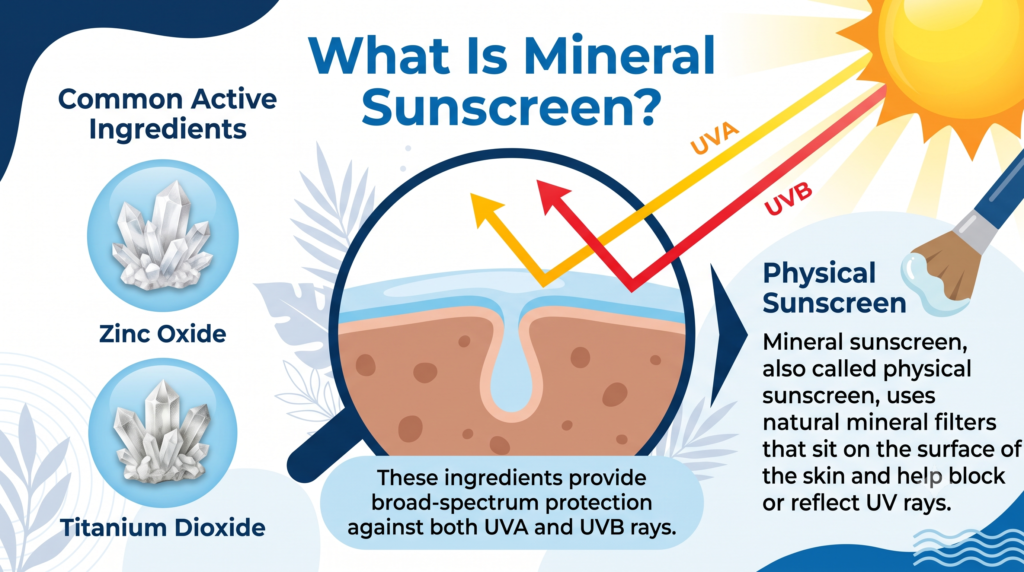
Mineral sunscreen, also called physical sunscreen, uses natural mineral filters that sit on the surface of the skin and help block or reflect UV rays.
Common Active Ingredients
- Zinc Oxide
- Titanium Dioxide
These ingredients provide broad-spectrum protection against both UVA and UVB rays.
Benefits of Mineral Sunscreen
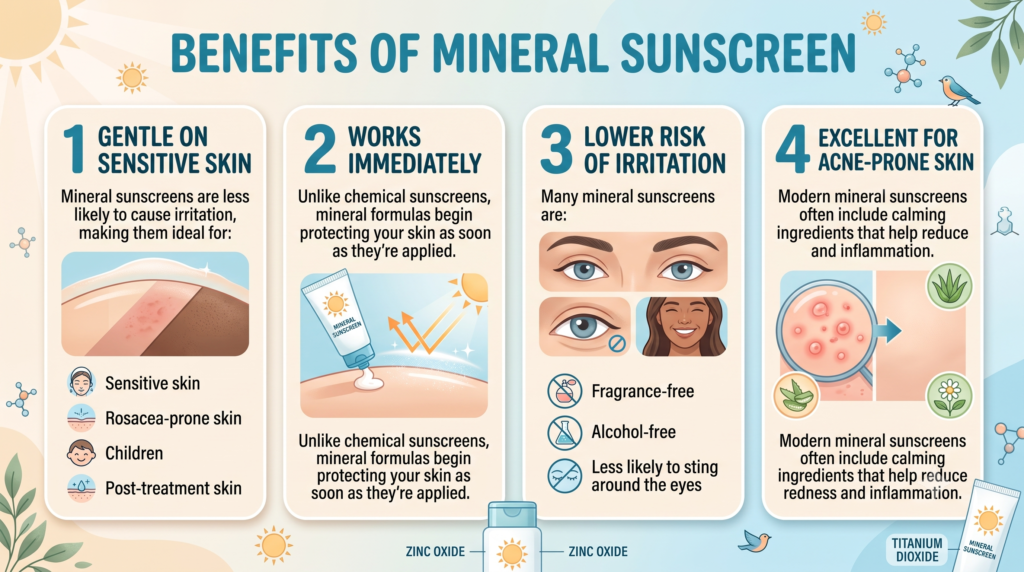
1. Gentle on Sensitive Skin
Mineral sunscreens are less likely to cause irritation, making them ideal for:
- Sensitive skin
- Rosacea-prone skin
- Children
- Post-treatment skin
2. Works Immediately
Unlike chemical sunscreens, mineral formulas begin protecting your skin as soon as they’re applied.
3. Lower Risk of Irritation
Many mineral sunscreens are:
- Fragrance-free
- Alcohol-free
- Less likely to sting around the eyes
4. Excellent for Acne-Prone Skin
Modern mineral sunscreens often include calming ingredients that help reduce redness and inflammation.
Drawbacks of Mineral Sunscreen
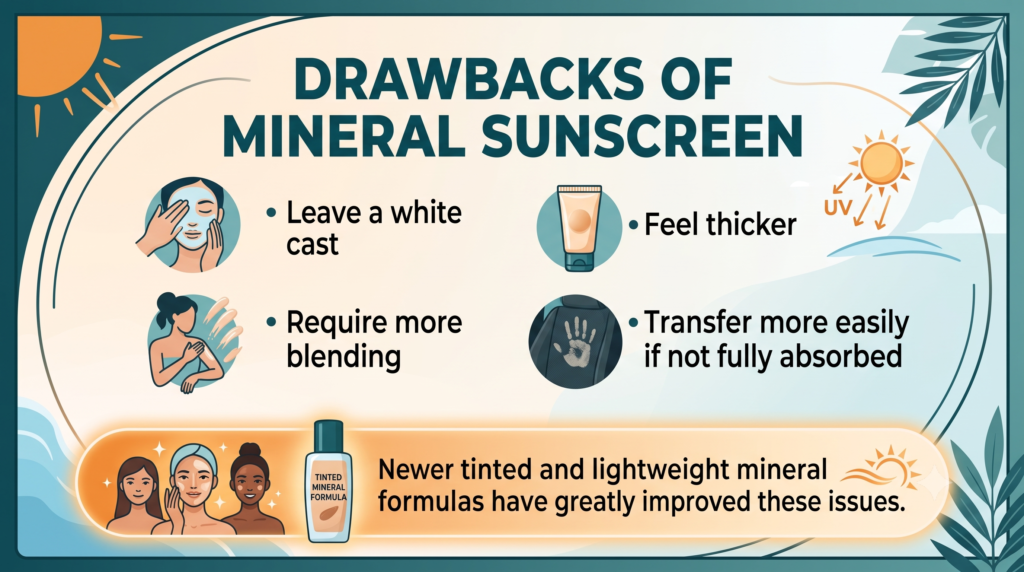
Some mineral sunscreens may:
- Leave a white cast
- Feel thicker
- Require more blending
- Transfer more easily if not fully absorbed
Newer tinted and lightweight mineral formulas have greatly improved these issues.
What Is Chemical Sunscreen?
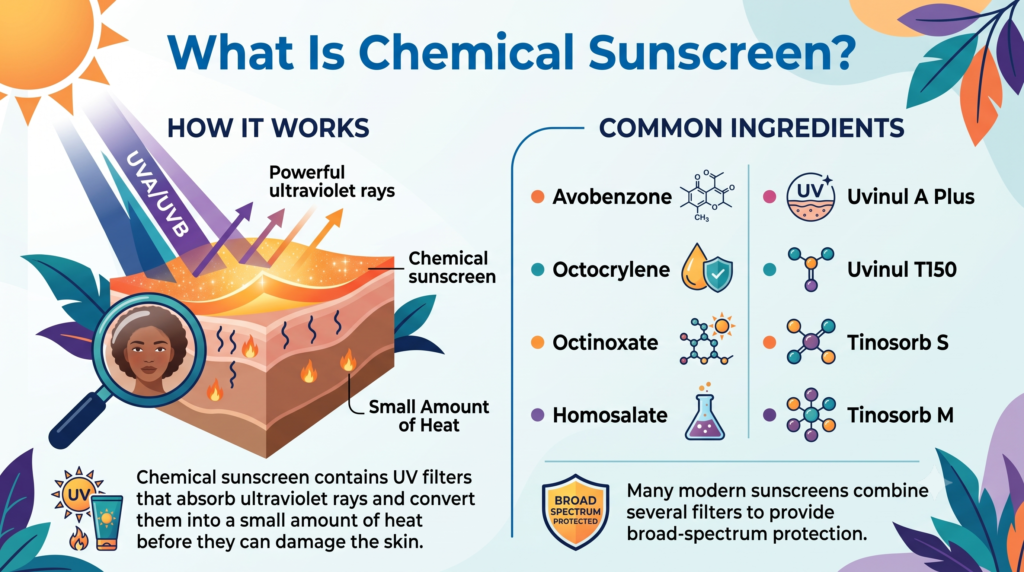
Chemical sunscreen contains UV filters that absorb ultraviolet rays and convert them into a small amount of heat before they can damage the skin.
Common Ingredients
- Avobenzone
- Octocrylene
- Octinoxate
- Homosalate
- Uvinul A Plus
- Uvinul T150
- Tinosorb S
- Tinosorb M
Many modern sunscreens combine several filters to provide broad-spectrum protection.
Benefits of Chemical Sunscreen
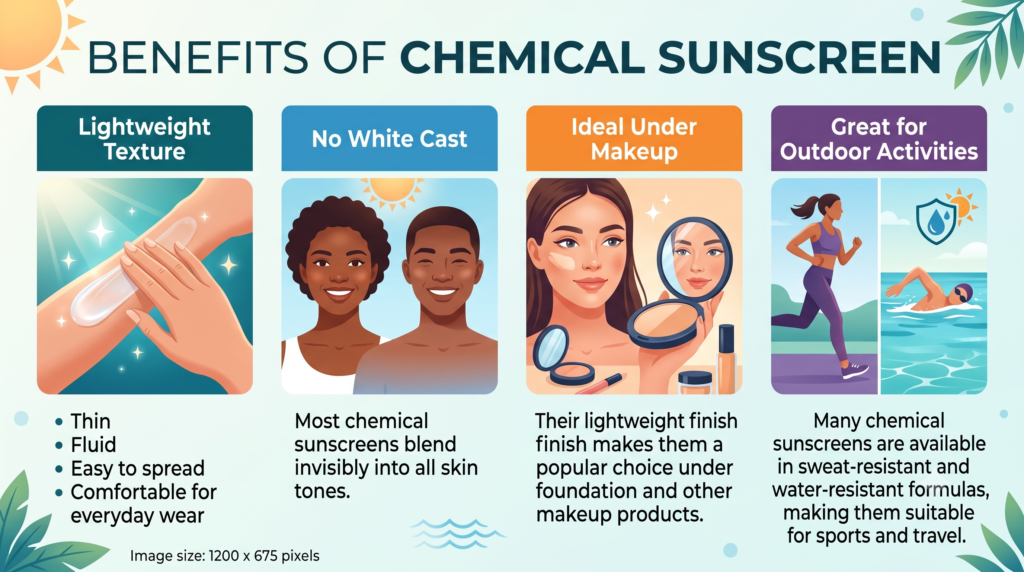
Lightweight Texture
Chemical sunscreens are usually:
- Thin
- Fluid
- Easy to spread
- Comfortable for everyday wear
No White Cast
Most chemical sunscreens blend invisibly into all skin tones.
Ideal Under Makeup
Their lightweight finish makes them a popular choice under foundation and other makeup products.
Great for Outdoor Activities
Many chemical sunscreens are available in sweat-resistant and water-resistant formulas, making them suitable for sports and travel.
Drawbacks of Chemical Sunscreen
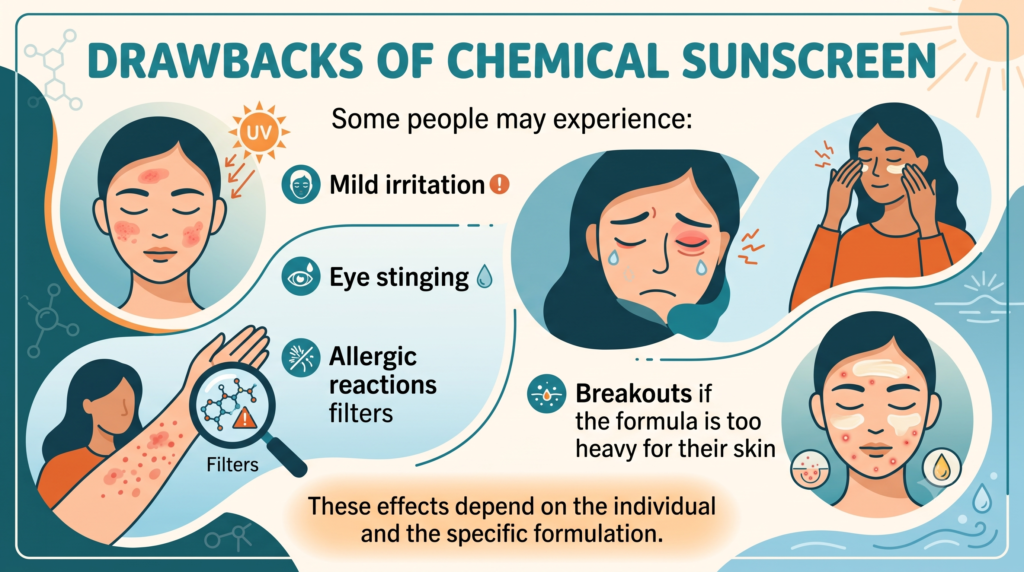
Some people may experience:
- Mild irritation
- Eye stinging
- Allergic reactions to specific filters
- Breakouts if the formula is too heavy for their skin
These effects depend on the individual and the specific formulation.
Mineral vs Chemical Sunscreen
| Feature | Mineral Sunscreen | Chemical Sunscreen |
|---|---|---|
| Active Ingredients | Zinc Oxide, Titanium Dioxide | Organic UV filters |
| Texture | Creamy or lotion | Lightweight gel or fluid |
| White Cast | Possible | Rare |
| Sensitive Skin | Excellent | Depends on formulation |
| Acne-Prone Skin | Often suitable | Choose non-comedogenic formulas |
| Makeup Friendly | Good with modern formulas | Excellent |
| Protection Starts | Immediately after application | Follow product directions before sun exposure |
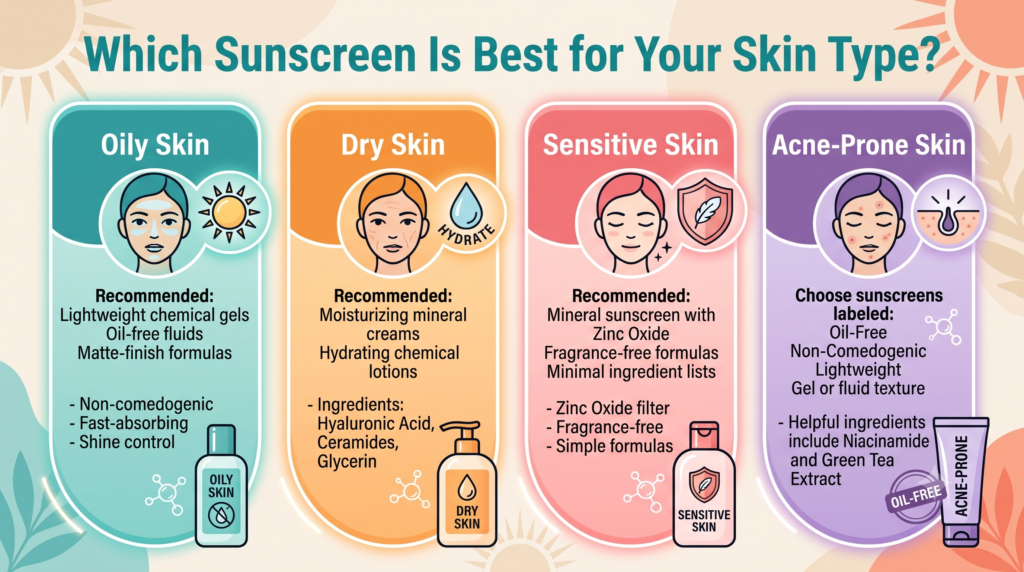
Which Sunscreen Is Best for Your Skin Type?
Oily Skin
Recommended:
- Lightweight chemical gels
- Oil-free fluids
- Matte-finish formulas
Look for:
- Non-comedogenic
- Fast-absorbing
- Shine control
Dry Skin
Recommended:
- Moisturizing mineral creams
- Hydrating chemical lotions
Ingredients:
- Hyaluronic Acid
- Ceramides
- Glycerin
Sensitive Skin
Recommended:
- Mineral sunscreen with Zinc Oxide
- Fragrance-free formulas
- Minimal ingredient lists
Acne-Prone Skin
Choose sunscreens labeled:
- Oil-Free
- Non-Comedogenic
- Lightweight
- Gel or fluid texture
Helpful ingredients include Niacinamide and Green Tea Extract.
Combination Skin
Either mineral or chemical sunscreen can work well, depending on the texture and finish you prefer. Gel-cream or lightweight lotion formulas are often a good balance.
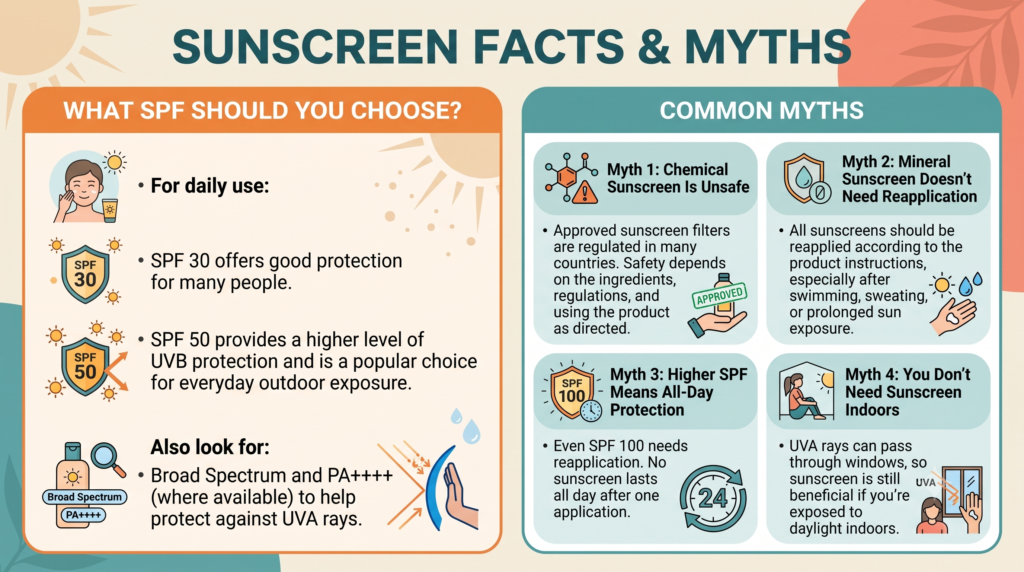
What SPF Should You Choose?
For daily use:
- SPF 30 offers good protection for many people.
- SPF 50 provides a higher level of UVB protection and is a popular choice for everyday outdoor exposure.
Also look for Broad Spectrum and PA++++ (where available) to help protect against UVA rays.
Common Myths
Myth 1: Chemical Sunscreen Is Unsafe
Approved sunscreen filters are regulated in many countries. Safety depends on the ingredients, regulations, and using the product as directed.
Myth 2: Mineral Sunscreen Doesn’t Need Reapplication
All sunscreens should be reapplied according to the product instructions, especially after swimming, sweating, or prolonged sun exposure.
Myth 3: Higher SPF Means All-Day Protection
Even SPF 100 needs reapplication. No sunscreen lasts all day after one application.
Myth 4: You Don’t Need Sunscreen Indoors
UVA rays can pass through windows, so sunscreen is still beneficial if you’re exposed to daylight indoors.
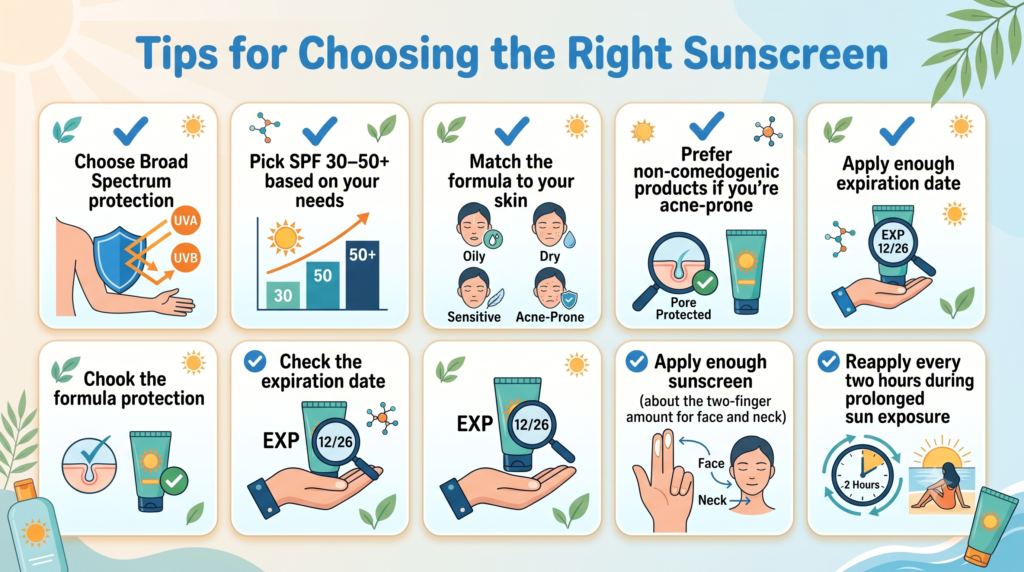
Tips for Choosing the Right Sunscreen
✔ Choose Broad Spectrum protection
✔ Pick SPF 30–50+ based on your needs
✔ Match the formula to your skin type
✔ Prefer non-comedogenic products if you’re acne-prone
✔ Check the expiration date
✔ Apply enough sunscreen (about the two-finger amount for face and neck)
✔ Reapply every two hours during prolonged sun exposure.
Ingredients to Avoid (If They Don’t Suit Your Skin)
Some people may find these less suitable:
- Heavy fragrances
- High alcohol content
- Thick oils (for acne-prone skin)
- Highly comedogenic ingredients
Patch testing is a good idea if you have sensitive skin.
Which Sunscreen Is Better Under Makeup?
Chemical sunscreen usually layers well because it is lightweight.
Mineral sunscreen can also work well if you choose a modern fluid or tinted formula and let it set before applying makeup.
Which Sunscreen Is Better for Outdoor Activities?
If you spend long hours outside:
Choose a sunscreen that is:
✔ Water-resistant
✔ Sweat-resistant
✔ SPF 50+
✔ Broad Spectrum
Remember to reapply after sweating or swimming.
How to Read a Sunscreen Label
Before buying, check for:
- SPF 30 or SPF 50
- Broad Spectrum
- PA++++ (where available)
- Water Resistant (if needed)
- Non-Comedogenic (for acne-prone skin)
- Fragrance-Free (for sensitive skin)
Signs Your Sunscreen Is Working Well
A sunscreen may be a good fit if:
- It feels comfortable to wear.
- It doesn’t leave your skin excessively greasy or dry.
- It doesn’t trigger irritation or breakouts.
- It layers well with your skincare routine.
- You remember to use it consistently every day.
Frequently Asked Questions
Which sunscreen is better for acne-prone skin?
Many people with acne-prone skin prefer lightweight, non-comedogenic gel or fluid sunscreens. Both mineral and chemical options can work well if the formula suits your skin.
Does mineral sunscreen leave a white cast?
Some do, especially those with high Zinc Oxide content. Tinted and newer formulations are designed to reduce this effect.
Which sunscreen is better under makeup?
Lightweight chemical sunscreens are often favored under makeup, but many modern mineral sunscreens also perform well.
Can I switch between mineral and chemical sunscreen?
Yes. You can choose the one that best fits your skin’s needs, the weather, or your daily activities.
Which sunscreen is better for oily skin?
Lightweight chemical sunscreens or oil-free gel formulas are often preferred for oily skin because they absorb quickly and leave a matte finish. Some lightweight mineral sunscreens also work well if they are non-comedogenic.
Is mineral sunscreen better for sensitive skin?
Yes. Mineral sunscreens containing Zinc Oxide or Titanium Dioxide are generally gentler and less likely to cause irritation, making them a popular choice for sensitive skin.
Can chemical sunscreen cause acne?
Not necessarily. Acne usually depends on the overall formula. Choosing a non-comedogenic, oil-free sunscreen can help reduce the risk of clogged pores.
Does mineral sunscreen leave a white cast?
Some mineral sunscreens can leave a white cast, especially on deeper skin tones. Tinted or newer formulations are designed to minimize this effect.
Which sunscreen is better under makeup?
Chemical sunscreens and lightweight mineral fluids usually layer well under makeup because they absorb quickly and create a smooth base.
Can I use sunscreen every day?
Yes. Dermatologists recommend wearing sunscreen every day, even when it’s cloudy or you’re spending time indoors near windows.
What SPF should I choose for daily use?
SPF 30 is suitable for many daily activities, while SPF 50 offers additional UVB protection and is a common choice for extended outdoor exposure.
What does PA++++ mean?
PA++++ indicates a very high level of UVA protection, helping reduce the risk of premature aging and pigmentation caused by UVA rays.
Final Thoughts
Both mineral and chemical sunscreens are effective when used correctly. The best sunscreen is the one you’ll apply generously every day and reapply when needed.
If you have sensitive or reactive skin, a mineral sunscreen may be the better option. If you prefer an invisible, lightweight finish, a chemical sunscreen may be more comfortable.
The key isn’t choosing the “perfect” sunscreen—it’s choosing one that fits your skin type, feels comfortable, and becomes a consistent part of your daily skincare routine.
About the Author
Hi, I’m the creator of this skincare blog, dedicated to helping you make smarter skincare choices with simple, research-backed content. My goal is to break down complex skincare topics into easy-to-understand guides so you can find products that truly work for your skin type.
Whether you’re looking for the best sunscreen, building a skincare routine, or comparing ingredients, you’ll find honest buying guides, practical tips, and easy product recommendations here. Every article is written with a focus on everyday skincare needs, helping you choose products based on skin type, ingredients, and real-world performance.
This blog covers topics such as:
- Sunscreen buying guides
- Skincare routines for different skin types
- Ingredient breakdowns
- Product comparisons
- Acne-prone skin care tips
- Sun protection advice
- Honest skincare recommendations
My mission is to help readers achieve healthier, protected skin through reliable information and well-researched skincare content.
Thank you for visiting, and I hope these guides help you build a skincare routine that works for you. Happy reading! 🌿☀️