
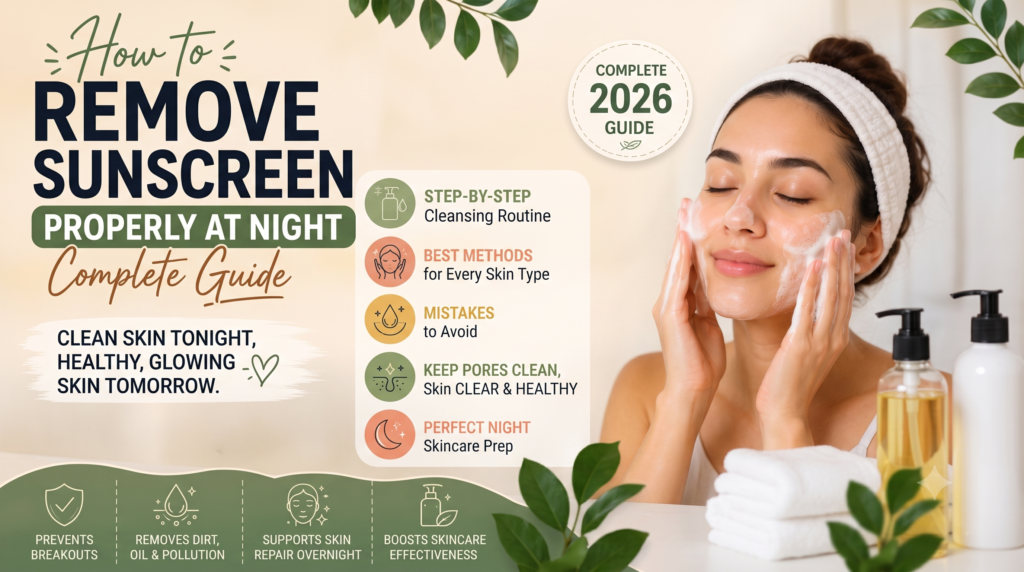
How to Remove Sunscreen Properly at Night
Introduction
Applying sunscreen every morning is one of the best habits for protecting your skin from sunburn, premature aging, hyperpigmentation, and skin cancer. But there’s another step that’s just as important-removing sunscreen properly at the end of the day.
Many people wash their face quickly with water or a basic cleanser and assume that’s enough. However, sunscreen-especially water-resistant, long-wear, or mineral formulas-can leave behind residue that may mix with sweat, oil, pollution, and makeup. Over time, this buildup can contribute to clogged pores, dullness, and breakouts if not removed thoroughly.
In this complete guide, you’ll learn why sunscreen removal matters, the best cleansing methods for every skin type, common mistakes to avoid, and how to build the perfect nighttime cleansing routine.
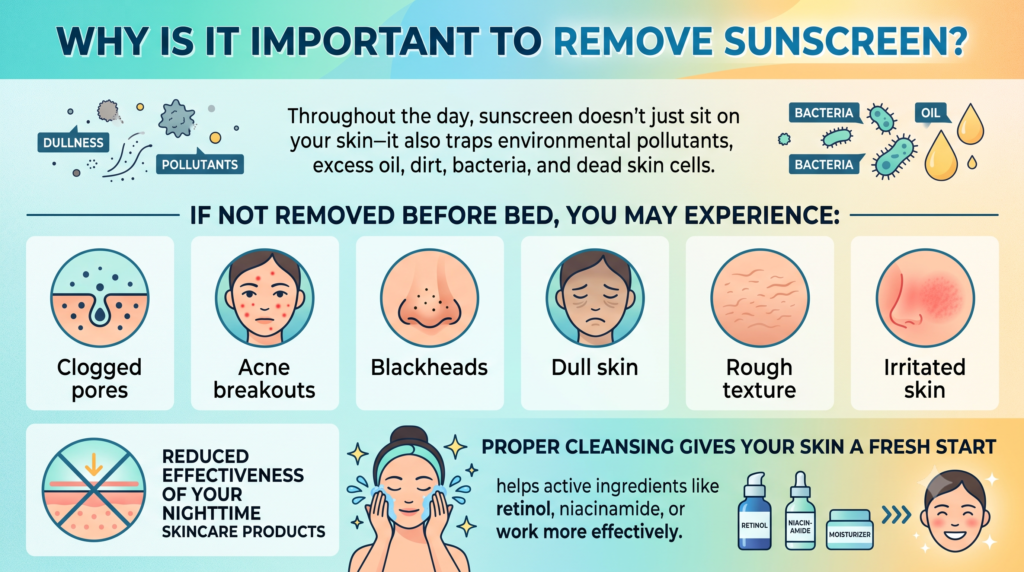
Why Is It Important to Remove Sunscreen?
Throughout the day, sunscreen doesn’t just sit on your skin-it also traps environmental pollutants, excess oil, dirt, bacteria, and dead skin cells.
If these aren’t removed before bed, you may experience:
- Clogged pores
- Acne breakouts
- Blackheads
- Dull skin
- Rough texture
- Irritated skin
- Reduced effectiveness of your nighttime skincare products
Proper cleansing gives your skin a fresh start and helps active ingredients like retinol, niacinamide, or moisturizers work more effectively.
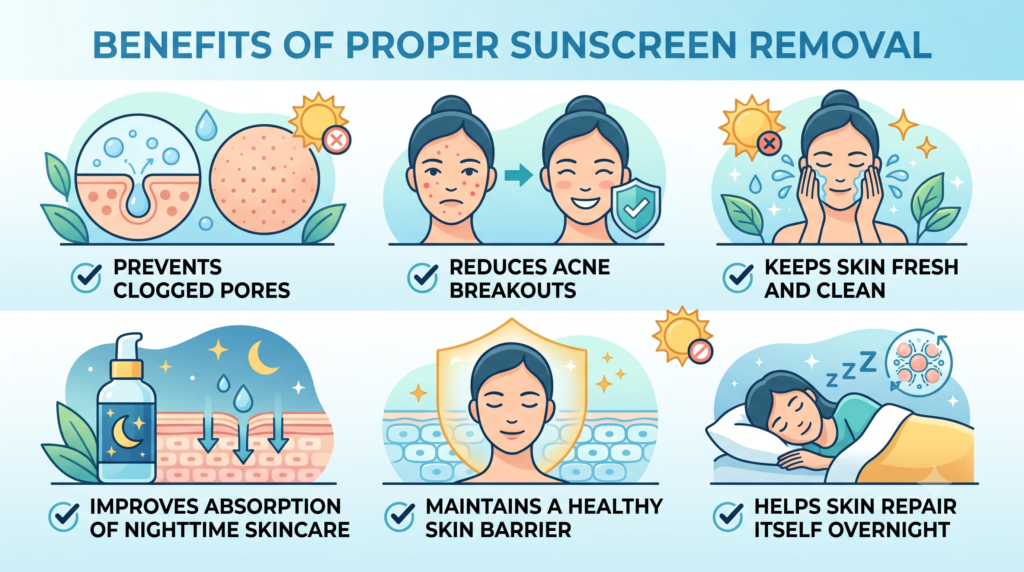
Benefits of Proper Sunscreen Removal
✔ Prevents clogged pores
✔ Reduces acne breakouts
✔ Keeps skin fresh and clean
✔ Improves absorption of nighttime skincare
✔ Maintains a healthy skin barrier
✔ Helps skin repair itself overnight
Can You Sleep With Sunscreen On?
The short answer is No.
Even if your sunscreen is lightweight or labeled as non-comedogenic, leaving it on overnight isn’t recommended.
While sunscreen is designed to protect your skin during the day, your skin focuses on repair and regeneration at night. Sleeping with sunscreen, oil, sweat, and environmental debris can interfere with this natural process.
Does Water Remove Sunscreen?
No.
Water alone cannot effectively remove sunscreen.
Most sunscreens are designed to resist water and sweat, so simply splashing your face won’t remove them completely.
Instead, use an appropriate facial cleanser.
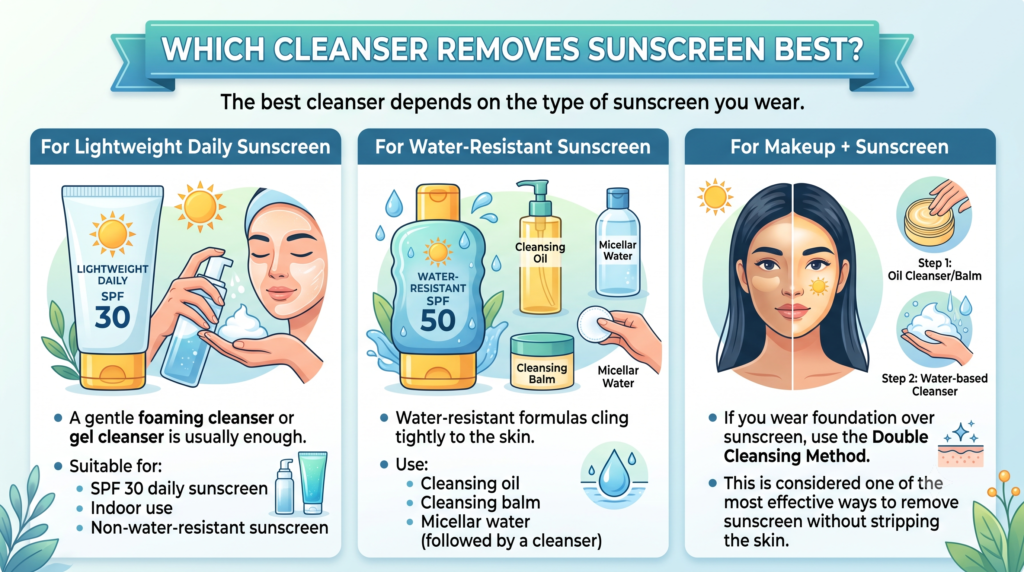
Which Cleanser Removes Sunscreen Best?
The best cleanser depends on the type of sunscreen you wear.
For Lightweight Daily Sunscreen
A gentle foaming cleanser or gel cleanser is usually enough.
Suitable for:
- SPF 30 daily sunscreen
- Indoor use
- Non-water-resistant sunscreen
For Water-Resistant Sunscreen
Water-resistant formulas cling tightly to the skin.
Use:
- Cleansing oil
- Cleansing balm
- Micellar water (followed by a cleanser)
For Makeup + Sunscreen
If you wear foundation over sunscreen, use the Double Cleansing Method.
This is considered one of the most effective ways to remove sunscreen without stripping the skin.
What Is Double Cleansing?
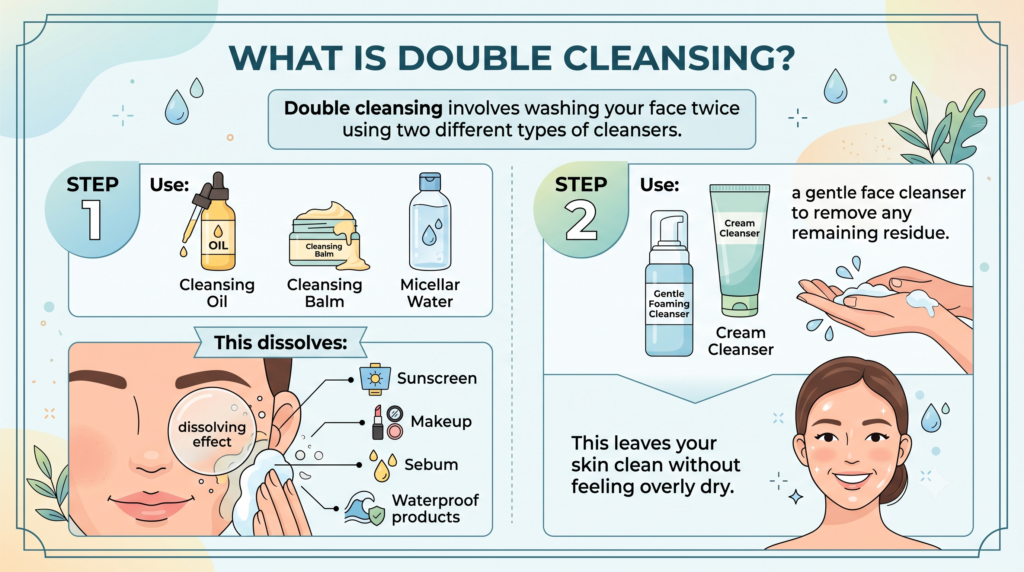
Double cleansing involves washing your face twice using two different types of cleansers.
Step 1
Use:
- Cleansing oil
- Cleansing balm
- Micellar water
This dissolves:
- Sunscreen
- Makeup
- Sebum
- Waterproof products
Step 2
Use a gentle face cleanser to remove any remaining residue.
This leaves your skin clean without feeling overly dry.
Does Every Sunscreen Need Double Cleansing?
Not always.
The cleansing method depends on the sunscreen you’re using.
Single Cleanse Is Usually Enough If:
- SPF 30
- Lightweight lotion
- Water-based sunscreen
- Indoor use
- No makeup
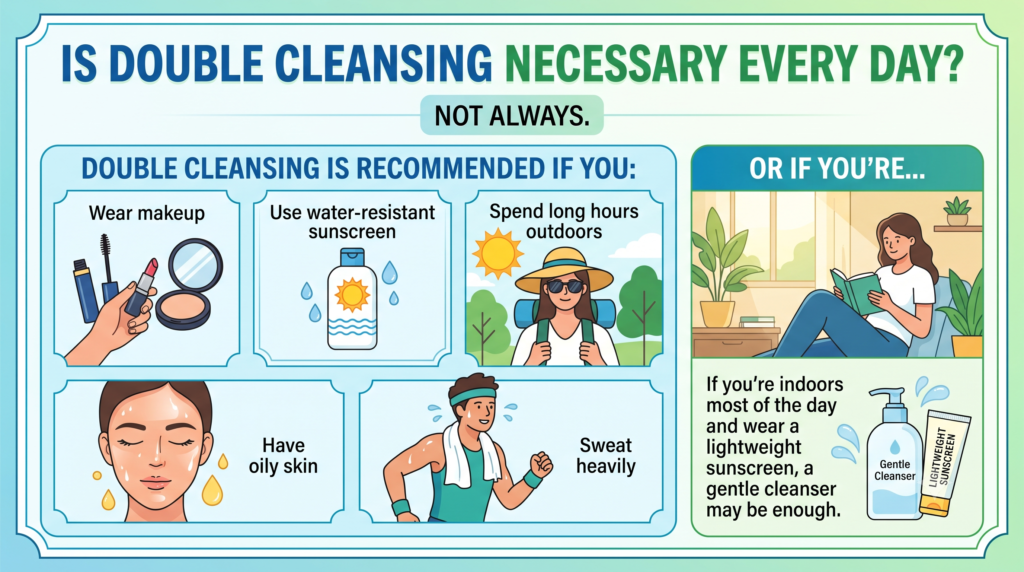
Double Cleansing Is Recommended If:
Silicone-based sunscreen
SPF 50+
Water-resistant sunscreen
Sports sunscreen
Heavy outdoor exposure
Makeup worn over sunscreen
How to Remove Sunscreen Step by Step
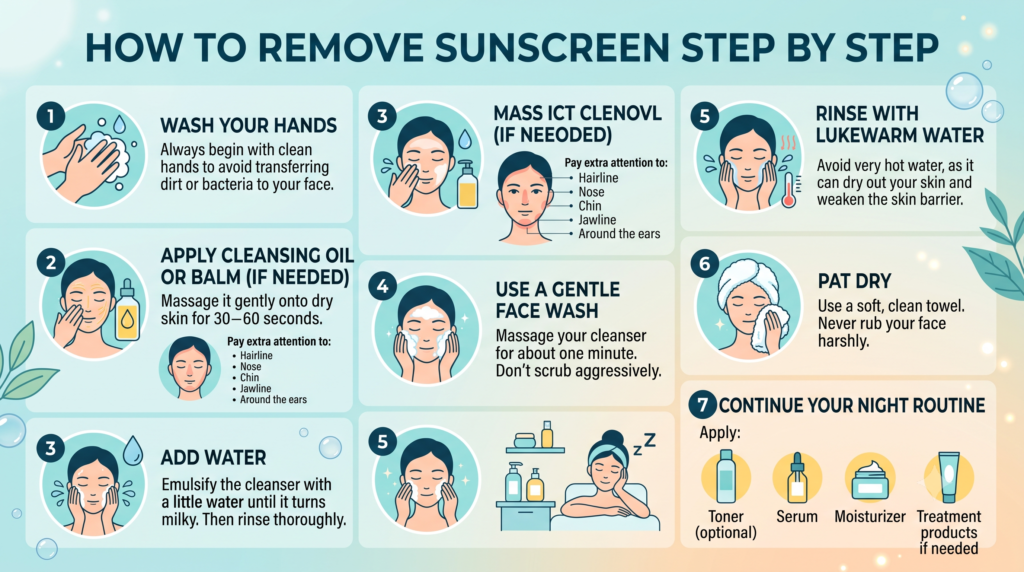
Step 1: Wash Your Hands
Always begin with clean hands to avoid transferring dirt or bacteria to your face.
Step 2: Apply Cleansing Oil or Balm (If Needed)
Massage it gently onto dry skin for 30–60 seconds.
Pay extra attention to:
- Hairline
- Nose
- Chin
- Jawline
- Around the ears
Step 3: Add Water
Emulsify the cleanser with a little water until it turns milky.
Then rinse thoroughly.
Step 4: Use a Gentle Face Wash
Massage your cleanser for about one minute.
Don’t scrub aggressively.
Step 5: Rinse With Lukewarm Water
Avoid very hot water, as it can dry out your skin and weaken the skin barrier.
Step 6: Pat Dry
Use a soft, clean towel.
Never rub your face harshly.
Step 7: Continue Your Night Routine
Apply:
- Toner (optional)
- Serum
- Moisturizer
- Treatment products if needed
Best Cleansing Routine for Different Skin Types
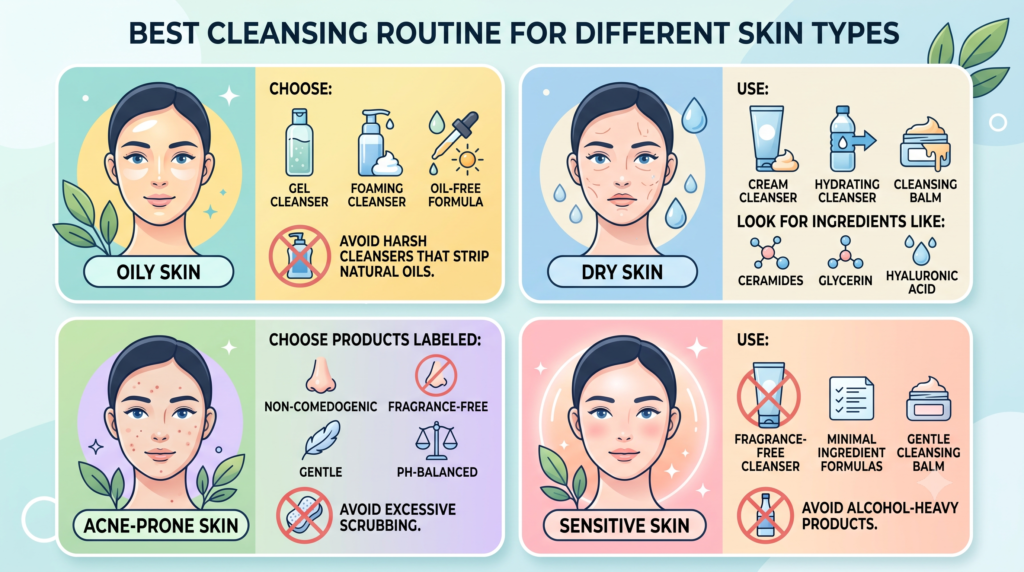
Oily Skin
Choose:
- Gel cleanser
- Foaming cleanser
- Oil-free formula
Avoid harsh cleansers that strip natural oils.
Dry Skin
Use:
- Cream cleanser
- Hydrating cleanser
- Cleansing balm
Look for ingredients like:
- Ceramides
- Glycerin
- Hyaluronic Acid
Acne-Prone Skin
Choose products labeled:
- Non-comedogenic
- Fragrance-free
- Gentle
- pH-balanced
Avoid excessive scrubbing.
Sensitive Skin
Use:
- Fragrance-free cleanser
- Minimal ingredient formulas
- Gentle cleansing balm
Avoid alcohol-heavy products.
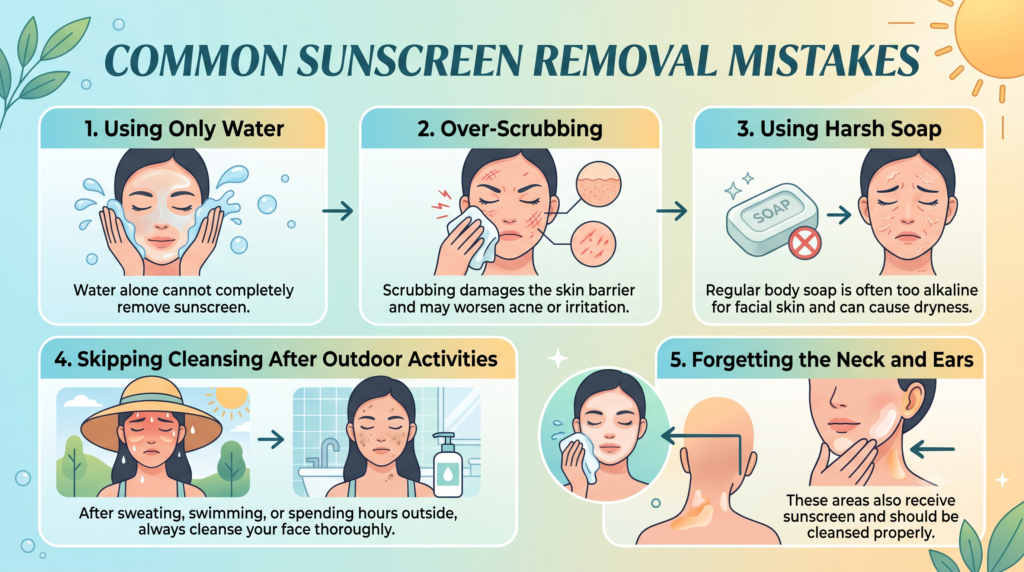
Common Sunscreen Removal Mistakes
Using Only Water
Water alone cannot completely remove sunscreen.
Over-Scrubbing
Scrubbing damages the skin barrier and may worsen acne or irritation.
Using Harsh Soap
Regular body soap is often too alkaline for facial skin and can cause dryness.
Skipping Cleansing After Outdoor Activities
After sweating, swimming, or spending hours outside, always cleanse your face thoroughly.
Forgetting the Neck and Ears
These areas also receive sunscreen and should be cleansed properly.
Should You Use Micellar Water?
Yes.
Micellar water is excellent for removing:
- Light sunscreen
- Makeup
- Dirt
However, many dermatologists recommend rinsing it off and following with a gentle cleanser for a more complete cleanse.
Can Cleansing Oils Cause Acne?
Not necessarily.
Quality cleansing oils are formulated to rinse away completely.
Many are suitable for acne-prone skin because they dissolve excess oil without clogging pores.
Choose products labeled non-comedogenic.
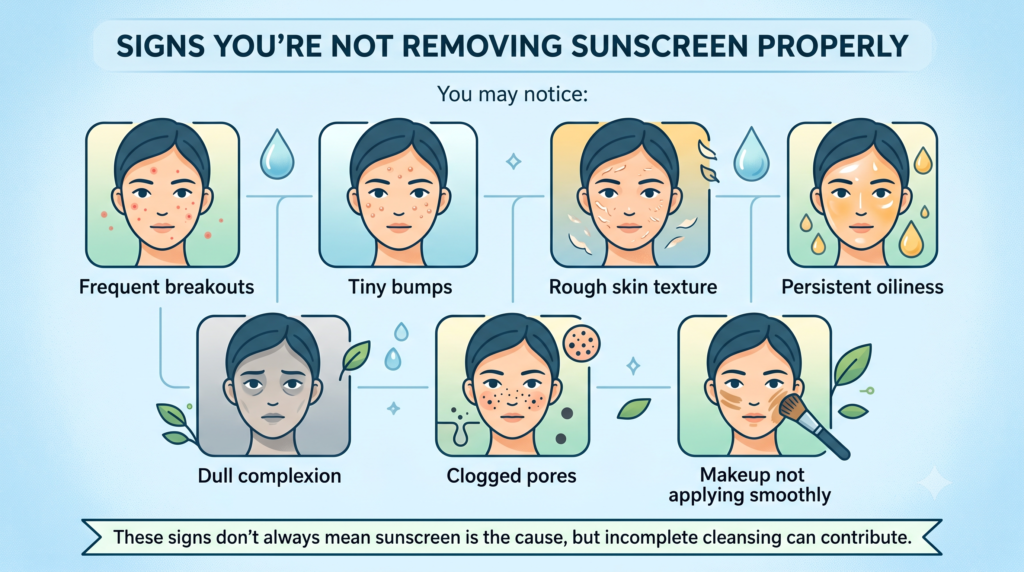
Signs You’re Not Removing Sunscreen Properly
You may notice:
- Frequent breakouts
- Tiny bumps
- Rough skin texture
- Persistent oiliness
- Dull complexion
- Clogged pores
- Makeup not applying smoothly
These signs don’t always mean sunscreen is the cause, but incomplete cleansing can contribute.
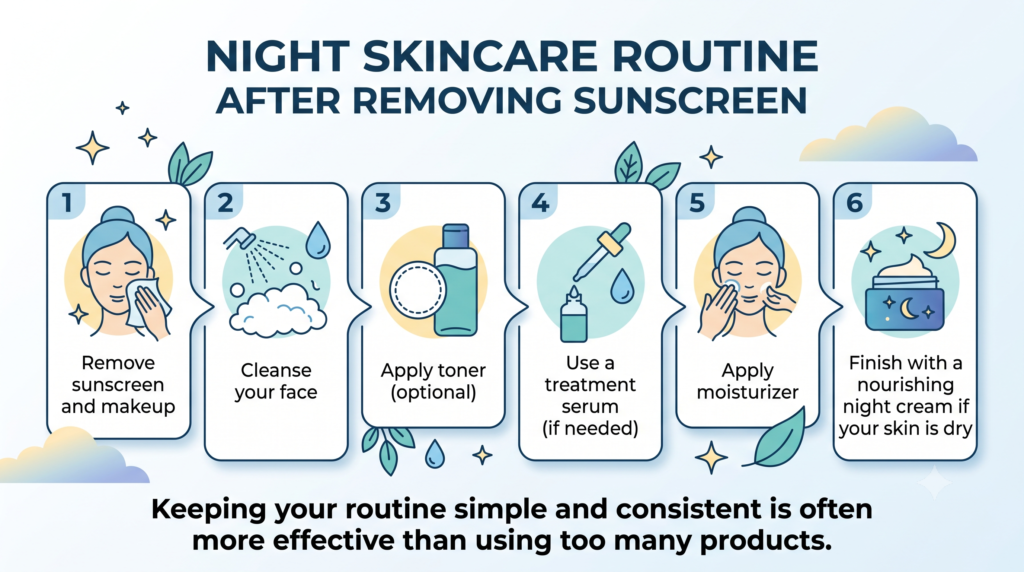
Night Skincare Routine After Removing Sunscreen
A simple nighttime routine could look like this:
- Remove sunscreen and makeup
- Cleanse your face
- Apply toner (optional)
- Use a treatment serum (if needed)
- Apply moisturizer
- Finish with a nourishing night cream if your skin is dry
Keeping your routine simple and consistent is often more effective than using too many products.
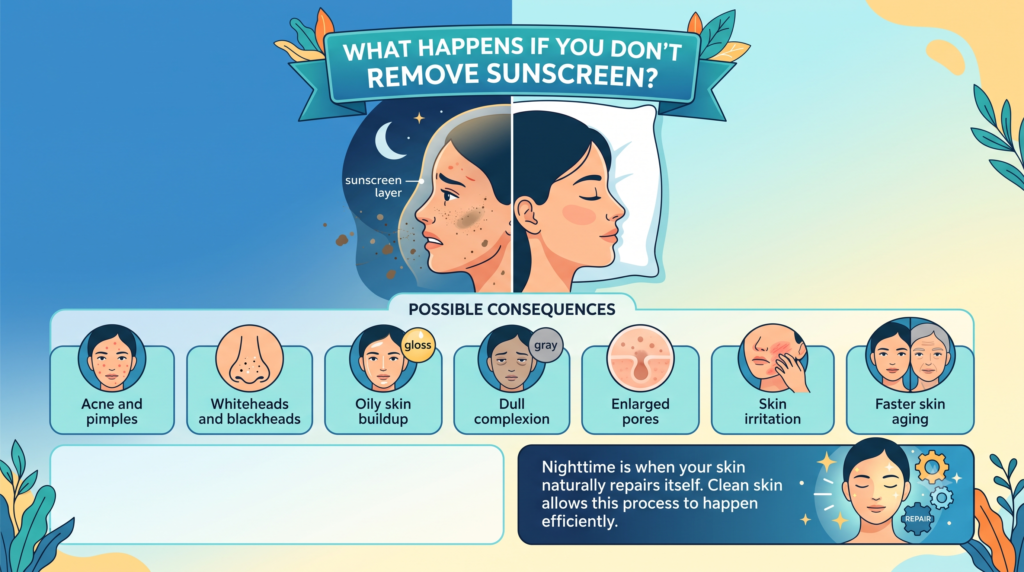
What Happens If You Don’t Remove Sunscreen?
Sleeping with sunscreen occasionally isn’t dangerous, but doing it regularly can lead to several skin problems.
Possible consequences include:
- Acne and pimples
- Whiteheads and blackheads
- Oily skin buildup
- Dull complexion
- Enlarged pores
- Skin irritation
- Faster skin aging due to poor overnight repair
Nighttime is when your skin naturally repairs itself. Clean skin allows this process to happen efficiently.
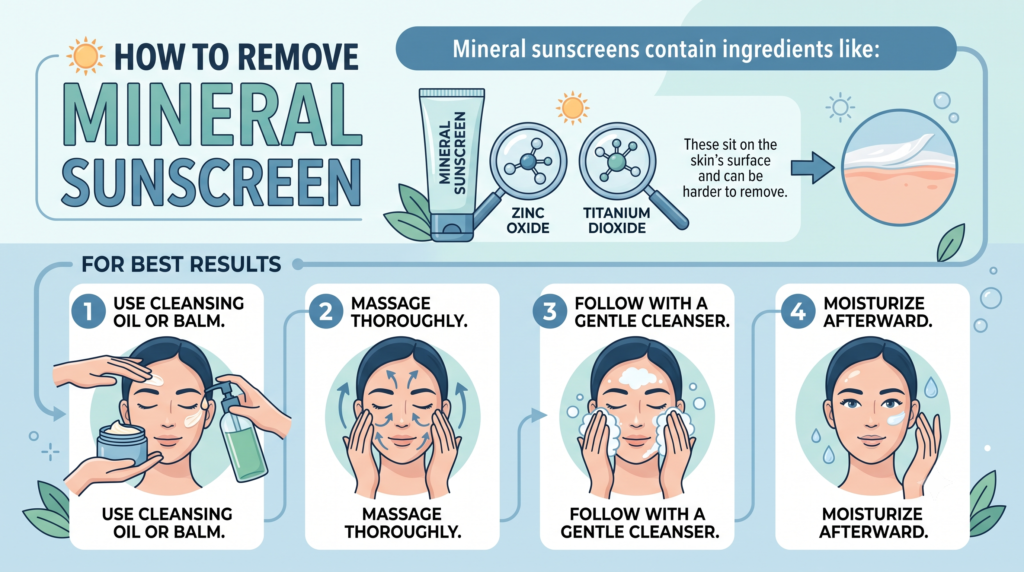
How to Remove Mineral Sunscreen
Mineral sunscreens contain ingredients like:
- Zinc Oxide
- Titanium Dioxide
These sit on the skin’s surface and can be harder to remove.
For best results:
- Use cleansing oil or balm.
- Massage thoroughly.
- Follow with a gentle cleanser.
- Moisturize afterward.
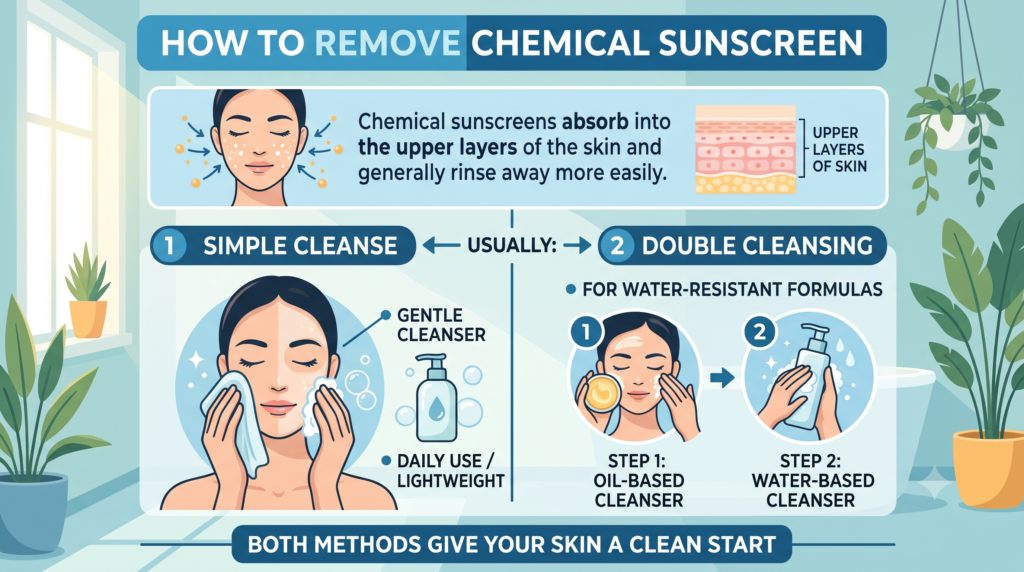
How to Remove Chemical Sunscreen
Chemical sunscreens absorb into the upper layers of the skin and generally rinse away more easily.
Usually:
- Gentle cleanser
- Or double cleansing if water-resistant
is enough.
Common Mistakes to Avoid
Many people unknowingly damage their skin while removing sunscreen.
Avoid these mistakes:
- Washing for only a few seconds
- Using harsh scrubs every night
- Skipping moisturizer
- Using very hot water
- Forgetting the hairline and neck
- Sleeping with sunscreen on
- Over-cleansing until skin feels “squeaky clean”
Healthy skin should feel clean but comfortable—not tight or dry.
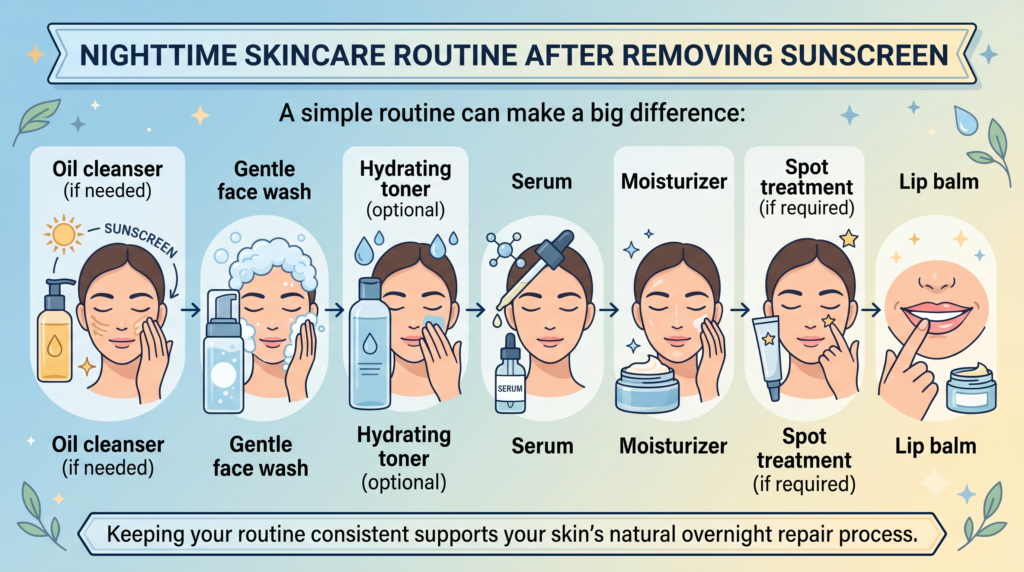
Nighttime Skincare Routine After Removing Sunscreen
A simple routine can make a big difference:
- Oil cleanser (if needed)
- Gentle face wash
- Hydrating toner (optional)
- Serum
- Moisturizer
- Spot treatment (if required)
- Lip balm
Keeping your routine consistent supports your skin’s natural overnight repair process.
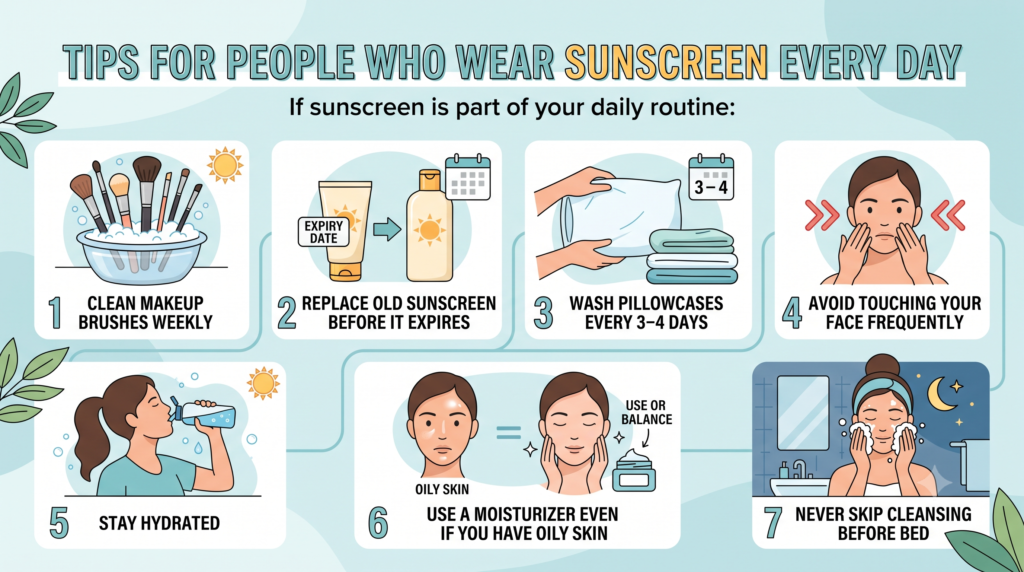
Tips for People Who Wear Sunscreen Every Day
If sunscreen is part of your daily routine:
- Clean makeup brushes weekly.
- Replace old sunscreen before it expires.
- Wash pillowcases every 3–4 days.
- Avoid touching your face frequently.
- Stay hydrated.
- Use a moisturizer even if you have oily skin.
- Never skip cleansing before bed.
Frequently Asked Questions
Can I sleep with sunscreen on?
It’s best not to. Removing sunscreen at night helps prevent clogged pores and allows your skin to repair itself.
Is double cleansing necessary every day?
Only if you wear heavy, water-resistant sunscreen or makeup. Otherwise, a thorough single cleanse may be enough.
Can micellar water remove sunscreen?
Micellar water can remove light sunscreen, but heavy or water-resistant formulas are usually better removed with an oil cleanser followed by a face wash.
Can sunscreen cause acne?
Sunscreen itself doesn’t always cause acne. Using products that aren’t suitable for your skin type or not removing sunscreen properly can contribute to breakouts.
Should I exfoliate after removing sunscreen?
No. Exfoliation is only needed 1–2 times per week for most people. Daily exfoliation can damage the skin barrier.
Can I remove sunscreen with only a face wash?
Yes, if you’re wearing a lightweight, non-water-resistant sunscreen. Water-resistant formulas or sunscreen worn with makeup usually benefit from double cleansing.
Is double cleansing bad for the skin?
No. When done with gentle products, double cleansing effectively removes sunscreen and makeup without harming the skin.
Can sunscreen clog pores?
Some formulas may contribute to clogged pores for certain people. Choosing a non-comedogenic sunscreen and cleansing properly at night can help reduce the risk.
Do I need to remove sunscreen if I stayed indoors?
Yes. Sunscreen can mix with natural oils, sweat, and dust throughout the day, so it’s still a good idea to cleanse your skin before bed.
Is micellar water enough to remove sunscreen?
Micellar water works well for light sunscreen, but following it with a gentle cleanser provides a more thorough cleanse.
Should I exfoliate after removing sunscreen?
Not every day. Exfoliate only 1–2 times a week (or as appropriate for your skin) to avoid over-exfoliation and irritation.
Can I use coconut oil to remove sunscreen?
Coconut oil can dissolve sunscreen, but it may clog pores for some people. A dedicated cleansing oil or balm is generally a better option.
Final Thoughts
Removing sunscreen properly is just as important as applying it. A thorough but gentle cleansing routine helps prevent clogged pores, supports your skin’s natural overnight repair process, and prepares your face for nighttime skincare.
Whether you use a chemical, mineral, or hybrid sunscreen, the key is to remove it completely using products suited to your skin type. Healthy skin starts with daily protection in the morning-and proper cleansing at night.